I'm here with my boots on, waiting to drive out to Eppley for my flight...and guess what? Today's the 64th anniversary of D-Day. In honor of it, here's a video someone made using Iron Maiden's song "The Longest Day" and scenes from Saving Private Ryan.
I'd definitely recommend it to all the young men. Not to the young women, though, unless they've already seen Private Ryan. We fight, in part, so that they won't have to see the horrors of war. In any case, use discretion, please.
http://www.youtube.com/watch?v=BSJ8rDlBZ_I
God bless, and talk to you in 4 weeks!
HUA!!!!!
Psalm 18
1I will love thee, O LORD, my strength.
2The LORD is my rock, and my fortress, and my deliverer; my God, my strength, in whom I will trust; my buckler, and the horn of my salvation, and my high tower.
3I will call upon the LORD, who is worthy to be praised: so shall I be saved from mine enemies.
4The sorrows of death compassed me, and the floods of ungodly men made me afraid.
5The sorrows of hell compassed me about: the snares of death prevented me.
6In my distress I called upon the LORD, and cried unto my God: he heard my voice out of his temple, and my cry came before him, even into his ears.
7Then the earth shook and trembled; the foundations also of the hills moved and were shaken, because he was wroth.
8There went up a smoke out of his nostrils, and fire out of his mouth devoured: coals were kindled by it.
9He bowed the heavens also, and came down: and darkness was under his feet.
10And he rode upon a cherub, and did fly: yea, he did fly upon the wings of the wind.
11He made darkness his secret place; his pavilion round about him were dark waters and thick clouds of the skies.
12At the brightness that was before him his thick clouds passed, hail stones and coals of fire.
13The LORD also thundered in the heavens, and the Highest gave his voice; hail stones and coals of fire.
14Yea, he sent out his arrows, and scattered them; and he shot out lightnings, and discomfited them.
15Then the channels of waters were seen, and the foundations of the world were discovered at thy rebuke, O LORD, at the blast of the breath of thy nostrils.
16He sent from above, he took me, he drew me out of many waters.
17He delivered me from my strong enemy, and from them which hated me: for they were too strong for me.
18They prevented me in the day of my calamity: but the LORD was my stay.
19He brought me forth also into a large place; he delivered me, because he delighted in me.
20The LORD rewarded me according to my righteousness; according to the cleanness of my hands hath he recompensed me.
21For I have kept the ways of the LORD, and have not wickedly departed from my God.
22For all his judgments were before me, and I did not put away his statutes from me.
23I was also upright before him, and I kept myself from mine iniquity.
24Therefore hath the LORD recompensed me according to my righteousness, according to the cleanness of my hands in his eyesight.
25With the merciful thou wilt shew thyself merciful; with an upright man thou wilt shew thyself upright;
26With the pure thou wilt shew thyself pure; and with the froward thou wilt shew thyself froward.
27For thou wilt save the afflicted people; but wilt bring down high looks.
28For thou wilt light my candle: the LORD my God will enlighten my darkness.
29For by thee I have run through a troop; and by my God have I leaped over a wall.
30As for God, his way is perfect: the word of the LORD is tried: he is a buckler to all those that trust in him.
31For who is God save the LORD? or who is a rock save our God?
32It is God that girdeth me with strength, and maketh my way perfect.
33He maketh my feet like hinds' feet, and setteth me upon my high places.
34He teacheth my hands to war, so that a bow of steel is broken by mine arms.
35Thou hast also given me the shield of thy salvation: and thy right hand hath holden me up, and thy gentleness hath made me great.
36Thou hast enlarged my steps under me, that my feet did not slip.
37I have pursued mine enemies, and overtaken them: neither did I turn again till they were consumed.
38I have wounded them that they were not able to rise: they are fallen under my feet.
39For thou hast girded me with strength unto the battle: thou hast subdued under me those that rose up against me.
40Thou hast also given me the necks of mine enemies; that I might destroy them that hate me.
41They cried, but there was none to save them: even unto the LORD, but he answered them not.
42Then did I beat them small as the dust before the wind: I did cast them out as the dirt in the streets.
43Thou hast delivered me from the strivings of the people; and thou hast made me the head of the heathen: a people whom I have not known shall serve me.
44As soon as they hear of me, they shall obey me: the strangers shall submit themselves unto me.
45The strangers shall fade away, and be afraid out of their close places.
46The LORD liveth; and blessed be my rock; and let the God of my salvation be exalted.
47It is God that avengeth me, and subdueth the people under me.
48He delivereth me from mine enemies: yea, thou liftest me up above those that rise up against me: thou hast delivered me from the violent man.
49Therefore will I give thanks unto thee, O LORD, among the heathen, and sing praises unto thy name.
50Great deliverance giveth he to his king; and sheweth mercy to his anointed, to David, and to his seed for evermore.
Showing posts with label history. Show all posts
Showing posts with label history. Show all posts
06 June 2008


26 May 2008
In Flanders Field
By: Lieutenant Colonel John McCrae, MD (1872-1918)
Canadian Army
IN FLANDERS FIELDS the poppies blow
Between the crosses row on row,
That mark our place; and in the sky
The larks, still bravely singing, fly
Scarce heard amid the guns below.
We are the Dead. Short days ago
We lived, felt dawn, saw sunset glow,
Loved and were loved, and now we lie
In Flanders fields.
Take up our quarrel with the foe:
To you from failing hands we throw
The torch; be yours to hold it high.
If ye break faith with us who die
We shall not sleep, though poppies grow
In Flanders fields.
Let us not forget.
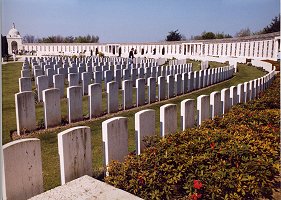
Graveyard at Ypres

Painting based on the Vietnam War Memorial

U.S.S. Arizona Memorial

World War II Memorial in Washington, D.C.

Raising the flag on Mt. Suribachi (Iwo Jima, 1945)

Canadian Army
IN FLANDERS FIELDS the poppies blow
Between the crosses row on row,
That mark our place; and in the sky
The larks, still bravely singing, fly
Scarce heard amid the guns below.
We are the Dead. Short days ago
We lived, felt dawn, saw sunset glow,
Loved and were loved, and now we lie
In Flanders fields.
Take up our quarrel with the foe:
To you from failing hands we throw
The torch; be yours to hold it high.
If ye break faith with us who die
We shall not sleep, though poppies grow
In Flanders fields.
Let us not forget.
Graveyard at Ypres
Painting based on the Vietnam War Memorial

U.S.S. Arizona Memorial

World War II Memorial in Washington, D.C.

Raising the flag on Mt. Suribachi (Iwo Jima, 1945)

19 April 2008
April 19th
Two hundred and thirty-three years ago today began the conflict that gave rise to one of the greatest nations God has raised up in this world. May we honor the men who have fought and died for her and for the principles for which she stands.
Concord Hymn
By Ralph Waldo Emerson
By the rude bridge that arched the flood,
Their flag to April's breeze unfurled,
Here once the embattled farmers stood,
And fired the shot heard round the world.
The foe long since in silence slept;
Alike the conqueror silent sleeps;
And Time the ruined bridge has swept
Down the dark stream which seaward creeps.
On this green bank, by this soft stream,
We set to-day a votive stone;
That memory may their deed redeem,
When, like our sires, our sons are gone.
Spirit, that made those heroes dare
To die, and leave their children free,
Bid Time and Nature gently spare
The shaft we raise to them and thee.

Concord Hymn
By Ralph Waldo Emerson
By the rude bridge that arched the flood,
Their flag to April's breeze unfurled,
Here once the embattled farmers stood,
And fired the shot heard round the world.
The foe long since in silence slept;
Alike the conqueror silent sleeps;
And Time the ruined bridge has swept
Down the dark stream which seaward creeps.
On this green bank, by this soft stream,
We set to-day a votive stone;
That memory may their deed redeem,
When, like our sires, our sons are gone.
Spirit, that made those heroes dare
To die, and leave their children free,
Bid Time and Nature gently spare
The shaft we raise to them and thee.

17 April 2008
Psalm 90
I recently re-discovered that my Geneva Bible came with a CD-ROM containing the Geneva Bible in PDF format, along with the Apocrypha, AND the Metrical Psalms. The Metered Psalms were quite well done, and here is Psalm 90 (which happens to be my favorite), for those who are interested.
Domine refugium. Ps.90.I.H.
Moses seeing the people neither admonished by the
brevity of their life, nor by plagues to be thankful,
prayeth God to turn their hearts, and continue his mercy
toward them and their posterity forever.
Sing this as the 78 Psalm.
Thou Lord hast been our sure defense,
our place of ease and rest:
In all times past, yea, so long since,
as cannot be expressed.
2 Ere there was made mountain or hill,
the earth and all abroad:
From age to age, and always still,
forever thou art God.
3 Thou grindest man through grief and pain,
to dust, or clay, and then,
And then thou saist again, return
again, ye sons of men,
4 The lasting of a thousand year
What is it in thy sight?
As yesterday it doth appear
or as a watch by night.
5 So soon as thou dost scatter them,
then is their life and tread,
All as a sleep, and like the grass,
whose beauty soon doth fade.
6 Which in the morning shines full bright,
but fadeth by and by:
And is cut down ere it be night,
all withered, dead and dry.
7 For through thine anger we consume
our might is much decayed:
And of thy servant wrath and fume
we are full sore afraid.
8 The wicked works that we have wrought
thou setst before thine eye:
Our privy faults, yea, eke our thoughts
thy countenance doth spy.
9 For through thy wrath our days do waste,
thereof doth naught remain:
Our years consumes as words or blasts,
and are not called again.
10 Our time is threescore years and ten,
that we do live on mold:
If one see fourscore, surely then
we count him wondrous old.
11 Yet of this time the strength and chief
the which we count upon:
Is nothing else but painful grief,
and we like blasts are gone.
12 Who once doth know what strength is there
what might thine anger hath?
Or in his heart who doth thee fear
according to thy wrath?
13 Instruct us Lord to know and try,
how long our days remain:
That then we may our hearts apply
true wisdom to attain.
14 Return O Lord, how long wilt thou
forth on in wrath proceed?
Show favor to thy servants now,
and help them at their need.
15 Refresh us with thy mercy soon,
and then our joy shall be:
All times so long as life shall last
in heart rejoice shall we.
16 As thou hast plagued us before:
now also make us glad:
And for the years wherein full sore
affliction we have had.
17 O let thy work and power appear,
and on thy servant’s light:
And show unto thy children dear,
the glory and thy might.
18 Lord let thy grace and mercy stand
on us thy servant thus:
Confirm the works we take in hand,
Lord prosper them to us.
Domine refugium. Ps.90.I.H.
Moses seeing the people neither admonished by the
brevity of their life, nor by plagues to be thankful,
prayeth God to turn their hearts, and continue his mercy
toward them and their posterity forever.
Sing this as the 78 Psalm.
Thou Lord hast been our sure defense,
our place of ease and rest:
In all times past, yea, so long since,
as cannot be expressed.
2 Ere there was made mountain or hill,
the earth and all abroad:
From age to age, and always still,
forever thou art God.
3 Thou grindest man through grief and pain,
to dust, or clay, and then,
And then thou saist again, return
again, ye sons of men,
4 The lasting of a thousand year
What is it in thy sight?
As yesterday it doth appear
or as a watch by night.
5 So soon as thou dost scatter them,
then is their life and tread,
All as a sleep, and like the grass,
whose beauty soon doth fade.
6 Which in the morning shines full bright,
but fadeth by and by:
And is cut down ere it be night,
all withered, dead and dry.
7 For through thine anger we consume
our might is much decayed:
And of thy servant wrath and fume
we are full sore afraid.
8 The wicked works that we have wrought
thou setst before thine eye:
Our privy faults, yea, eke our thoughts
thy countenance doth spy.
9 For through thy wrath our days do waste,
thereof doth naught remain:
Our years consumes as words or blasts,
and are not called again.
10 Our time is threescore years and ten,
that we do live on mold:
If one see fourscore, surely then
we count him wondrous old.
11 Yet of this time the strength and chief
the which we count upon:
Is nothing else but painful grief,
and we like blasts are gone.
12 Who once doth know what strength is there
what might thine anger hath?
Or in his heart who doth thee fear
according to thy wrath?
13 Instruct us Lord to know and try,
how long our days remain:
That then we may our hearts apply
true wisdom to attain.
14 Return O Lord, how long wilt thou
forth on in wrath proceed?
Show favor to thy servants now,
and help them at their need.
15 Refresh us with thy mercy soon,
and then our joy shall be:
All times so long as life shall last
in heart rejoice shall we.
16 As thou hast plagued us before:
now also make us glad:
And for the years wherein full sore
affliction we have had.
17 O let thy work and power appear,
and on thy servant’s light:
And show unto thy children dear,
the glory and thy might.
18 Lord let thy grace and mercy stand
on us thy servant thus:
Confirm the works we take in hand,
Lord prosper them to us.
13 April 2008
Announcement and excerpt from USH2 paper
After about half a million edits...
Last Tuesday, I began turning a number of scenes that I've had in my head for a while into a story which I hope could end as a novella, at least. I have only the first chapter written and know what I want to do with the last two chapters; unfortunately, I only know the direction I want to take with the middle section, not the storyline. So I'm not going to bind myself to a set deadline for posting the next chapter, but if you'd like to read the first chapter at least, I've posted it to my Fiction/Poetry blog. I also submitted it, with a few poems, to the PHC Stylus literary publication. Input and criticism (from fellow Lit Snobs and all of my other friends who put up with our delusion that we're the coolest) is appreciated. I'd especially like suggestions for a main title; I currently plan for "Where the Wind Wills" to be a subtitle (and it is, by the way, a reference to John 3, not "Bohemian Rhapsody"...).
Also, our US History 2 paper is a comparison/contrast of Whittaker Chambers's Witness and Booker T. Washington's Up From Slavery. Up From Slavery was written in the late 1800s with Southern Reconstruction and the plight of the former slaves in mind, Witness in 1952 about the attempt to expose American Communism, but "for all their differences, they were both tales which brought the epic struggle between good and evil to a human level and made the principles applicable to the ordinary man by showing how ordinary men had fought and struggled with specific manifestations of that war," as I wrote in my paper.
The chief difference, though, in the authors' respective outlooks is one that struck me deeply as I was writing, and I devoted about a page to exploring that facet of their works. I may post more of the paper later, but here is the relevant excerpt for now:
"Washington was inspirational because he extolled the ability of men to raise themselves up from the ashes, and warned them not to allow their circumstances to dictate their future in such a way that they would never improve themselves. He was optimistic that the problems could be resolved and that the American people could put their dark past behind them in the next few generations. While acknowledging the faults of both parties in the past, he truly believed that they could be overcome by hard work and virtuous living—he believed that his object was attainable and that success lay within the volition of him and his fellow man.
Chambers was inspirational for nearly the opposite reason: he acknowledged that he was weak, and insisted that his role was thrust upon him against his will—but it was precisely the knowledge that this was his mission, arranged for him by destiny, that gave him the strength to fulfill it, because he knew that the same Providence that had assigned this terrible ordeal to him would direct the results, whether or not those results included his destruction. Chambers was willing to abandon all for the sake of the world and for the sake of destiny--and for his witness against Communism and for truth. He was pessimistic that his sacrifice would result in the ultimate salvation of the world—if it was not destroyed by Communism, it would fall prey to something else—but was certain that the guiding hand of God would nevertheless have a purpose even in this.
He thus inspired to play their part even men who are all too conscious of their own weakness. Their part need not be so crucial as his, nor need it be successful in human terms—whatever their part was, no matter how seemingly large or small, it formed a cog in the plan of Providence. He disagreed with the idea that the world would linearly improve; his hope lay in the ultimate end of the world which no human eye could yet see. This fundamental difference between Washington’s and Chambers’s presentations goes as deep as the level of their worldview, and could be described in religious terms as running as deeply as the difference between the theological concepts of merit and grace, for this is precisely the difference between them."
Last Tuesday, I began turning a number of scenes that I've had in my head for a while into a story which I hope could end as a novella, at least. I have only the first chapter written and know what I want to do with the last two chapters; unfortunately, I only know the direction I want to take with the middle section, not the storyline. So I'm not going to bind myself to a set deadline for posting the next chapter, but if you'd like to read the first chapter at least, I've posted it to my Fiction/Poetry blog. I also submitted it, with a few poems, to the PHC Stylus literary publication. Input and criticism (from fellow Lit Snobs and all of my other friends who put up with our delusion that we're the coolest) is appreciated. I'd especially like suggestions for a main title; I currently plan for "Where the Wind Wills" to be a subtitle (and it is, by the way, a reference to John 3, not "Bohemian Rhapsody"...).
Also, our US History 2 paper is a comparison/contrast of Whittaker Chambers's Witness and Booker T. Washington's Up From Slavery. Up From Slavery was written in the late 1800s with Southern Reconstruction and the plight of the former slaves in mind, Witness in 1952 about the attempt to expose American Communism, but "for all their differences, they were both tales which brought the epic struggle between good and evil to a human level and made the principles applicable to the ordinary man by showing how ordinary men had fought and struggled with specific manifestations of that war," as I wrote in my paper.
The chief difference, though, in the authors' respective outlooks is one that struck me deeply as I was writing, and I devoted about a page to exploring that facet of their works. I may post more of the paper later, but here is the relevant excerpt for now:
"Washington was inspirational because he extolled the ability of men to raise themselves up from the ashes, and warned them not to allow their circumstances to dictate their future in such a way that they would never improve themselves. He was optimistic that the problems could be resolved and that the American people could put their dark past behind them in the next few generations. While acknowledging the faults of both parties in the past, he truly believed that they could be overcome by hard work and virtuous living—he believed that his object was attainable and that success lay within the volition of him and his fellow man.
Chambers was inspirational for nearly the opposite reason: he acknowledged that he was weak, and insisted that his role was thrust upon him against his will—but it was precisely the knowledge that this was his mission, arranged for him by destiny, that gave him the strength to fulfill it, because he knew that the same Providence that had assigned this terrible ordeal to him would direct the results, whether or not those results included his destruction. Chambers was willing to abandon all for the sake of the world and for the sake of destiny--and for his witness against Communism and for truth. He was pessimistic that his sacrifice would result in the ultimate salvation of the world—if it was not destroyed by Communism, it would fall prey to something else—but was certain that the guiding hand of God would nevertheless have a purpose even in this.
He thus inspired to play their part even men who are all too conscious of their own weakness. Their part need not be so crucial as his, nor need it be successful in human terms—whatever their part was, no matter how seemingly large or small, it formed a cog in the plan of Providence. He disagreed with the idea that the world would linearly improve; his hope lay in the ultimate end of the world which no human eye could yet see. This fundamental difference between Washington’s and Chambers’s presentations goes as deep as the level of their worldview, and could be described in religious terms as running as deeply as the difference between the theological concepts of merit and grace, for this is precisely the difference between them."
27 March 2008
Yet another US History post
It is odd that most of my philosophical discussions this semester are coming from a history class--I guess that is what I get for having already taken such foundational courses as Constitutional Law, Theology, Principles of Biblical Reasoning, and Philosophy and being left with Geometry, Rhetoric, Freedom's Foundations, and US History. I'll just say that I can't wait to start my major courses...
In the meantime, here is a conversation from US History, stemming originally from a discussion on the difference in American sentiment between World War II and our own day. The first section was written by one of my classmates (reprinted by his permission), and my response is two-fold.
"I think we're realizing that zeitgeist has a lot to do with the public response to government action (it may well be the biggest factor). The general feeling of the 40s was "we just conquered depression and we're damned proud of that," while today's seems to be a more whiny version of "this is hard and I don't like it."
We are what our parents were to our grandparents - rebellious wimps in need of a spanking and some chores. I don't want to rant (since that's so callow), but it seems that our generation of men needs a dose of warrior instinct (in the Fight Club and 300 vein) to combat lethargy and weak wills, while our generation of women needs a dose of motherly responsibility (in the Clara Barton and WWII Women vein) to combat neglect and this idea of an absolute right to total independence."
"Perhaps this is reopening a can of worms that was sufficiently aired last semester (though it doesn't have to be such a reopening), but I wish to point out that the "empowerment" of women and the effeminization of men go hand in hand. Unfortunately, as women are willing to take charge (or demand the reins [in the case of the suffragette movement), men are often all too willing to cede it, especially if they don't see any good reason to hold it themselves (this would be the case when they don't see the Scriptural command for them to be the head of their households and in church leadership, etc.). It could be debated which comes first, though that's not my object: they are definitely complementary. The more important issue is which needs to be changed first, as men simply asserting their authority/responsibility over unwilling women isn't going to get far (I believe I remember the slogan "forced submission isn't truly submission," and I agree to a point).
The other option is women dropping their power where it is the man's responsibility and leaving it to the men to step up. I'd question the practical wisdom of this initially, but it actually makes sense if one considers the point that if women aren't to have responsibility in a given area (and I'm not talking specifics right now), then it is not incumbent on them to hold up that area of responsibility. If something falls through because the men didn't stand up in their area of responsibility, it is their fault and responsibility--not the women's. Perhaps the women could show a bit more trust in God's providence in our respective spheres of responsibility--and perhaps a bit more trust that some, at least, of the men WILL step up. Just a thought.
In any case, I suppose I have quite enough to worry about as a man needing to take on my own responsibility.
Anyway, I was pondering what has caused the shift, and one cause at least is ironic. The public schools are rife with the idea of self-reliance and self-esteem and "believe in yourself." For that matter, some of the churches are (Joel Osteen, anyone?). But my suspicion is that these people are looking at themselves and suddenly find that they ARE weak. For all the individualistic propaganda, they find that the individual IS weak.
To an extent, the Great Generation and the generations before were also independent and self-reliant (like the pioneer stock they were), but they were not individualistic, and their independence was in a large way centered around others, if that makes sense. In other words, they had an "I can do this" attitude, because they were fighting for a principle higher than themselves and received strength to achieve their goals.
All that the contemporary individualist has to fight for is himself--and is it worth it?"
In the meantime, here is a conversation from US History, stemming originally from a discussion on the difference in American sentiment between World War II and our own day. The first section was written by one of my classmates (reprinted by his permission), and my response is two-fold.
"I think we're realizing that zeitgeist has a lot to do with the public response to government action (it may well be the biggest factor). The general feeling of the 40s was "we just conquered depression and we're damned proud of that," while today's seems to be a more whiny version of "this is hard and I don't like it."
We are what our parents were to our grandparents - rebellious wimps in need of a spanking and some chores. I don't want to rant (since that's so callow), but it seems that our generation of men needs a dose of warrior instinct (in the Fight Club and 300 vein) to combat lethargy and weak wills, while our generation of women needs a dose of motherly responsibility (in the Clara Barton and WWII Women vein) to combat neglect and this idea of an absolute right to total independence."
"Perhaps this is reopening a can of worms that was sufficiently aired last semester (though it doesn't have to be such a reopening), but I wish to point out that the "empowerment" of women and the effeminization of men go hand in hand. Unfortunately, as women are willing to take charge (or demand the reins [in the case of the suffragette movement), men are often all too willing to cede it, especially if they don't see any good reason to hold it themselves (this would be the case when they don't see the Scriptural command for them to be the head of their households and in church leadership, etc.). It could be debated which comes first, though that's not my object: they are definitely complementary. The more important issue is which needs to be changed first, as men simply asserting their authority/responsibility over unwilling women isn't going to get far (I believe I remember the slogan "forced submission isn't truly submission," and I agree to a point).
The other option is women dropping their power where it is the man's responsibility and leaving it to the men to step up. I'd question the practical wisdom of this initially, but it actually makes sense if one considers the point that if women aren't to have responsibility in a given area (and I'm not talking specifics right now), then it is not incumbent on them to hold up that area of responsibility. If something falls through because the men didn't stand up in their area of responsibility, it is their fault and responsibility--not the women's. Perhaps the women could show a bit more trust in God's providence in our respective spheres of responsibility--and perhaps a bit more trust that some, at least, of the men WILL step up. Just a thought.
In any case, I suppose I have quite enough to worry about as a man needing to take on my own responsibility.
Anyway, I was pondering what has caused the shift, and one cause at least is ironic. The public schools are rife with the idea of self-reliance and self-esteem and "believe in yourself." For that matter, some of the churches are (Joel Osteen, anyone?). But my suspicion is that these people are looking at themselves and suddenly find that they ARE weak. For all the individualistic propaganda, they find that the individual IS weak.
To an extent, the Great Generation and the generations before were also independent and self-reliant (like the pioneer stock they were), but they were not individualistic, and their independence was in a large way centered around others, if that makes sense. In other words, they had an "I can do this" attitude, because they were fighting for a principle higher than themselves and received strength to achieve their goals.
All that the contemporary individualist has to fight for is himself--and is it worth it?"
Subscribe to:
Posts (Atom)

